
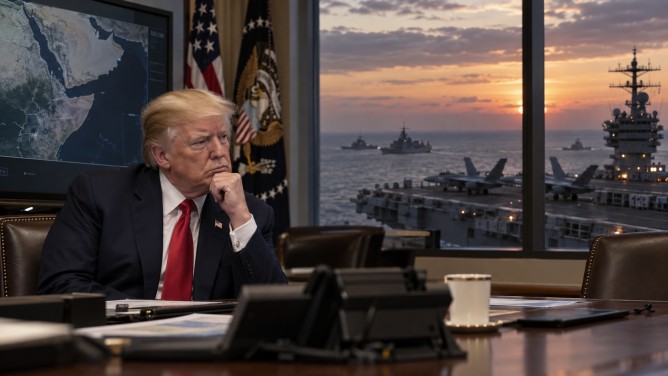
Tensions in the Middle East have escalated as the conflict involving Iran-backed Houthi rebels in Yemen continues to impact regional stability and global energy supplies. The United States, under pressure from Saudi Arabia, has been contemplating military intervention against the Houthis, who have increased their assaults on Saudi targets. However, the potential for U.S. military strikes has been postponed once again, as President Donald Trump decided to delay any immediate action.
After initially opposing military intervention, President Trump instructed the Pentagon to prepare for possible airstrikes following discussions with Saudi Crown Prince Mohammed bin Salman. Saudi Arabia has been urging the United States to take action as the Houthis intensify their attacks, threatening regional security. Despite these preparations, which included approving target lists and preparing U.S. warplanes, the administration opted to hold off on executing the strikes.
The U.S. military is already heavily engaged in a broader strategic conflict with Iran, and there are concerns among officials that opening another military front in Yemen could overextend American forces. This hesitation reflects apprehensions about the efficiency of airstrikes in altering the Houthis’ stance, especially given past U.S. military efforts that did not lead to a sustainable resolution in the region.
The conflict in Yemen has been ongoing, with the Iran-backed Houthis fighting against the internationally recognized Yemeni government, which receives support from Saudi Arabia. Recently, the conflict has seen renewed intensity, notably around key strategic points like the Red Sea and the Bab al-Mandab Strait. These developments raise alarms over the security of critical maritime routes and the potential disruption of global energy markets.
As the situation evolves, U.S. officials and regional experts continue to debate the potential effectiveness and consequences of intervention. With military resources already stretched thin and the complexities of the Yemeni conflict, the decision to delay airstrikes reflects a cautious approach to a rapidly changing geopolitical landscape.