
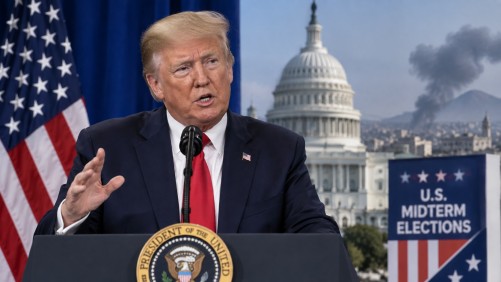
Amid ongoing tensions between the United States and Iran, President Donald Trump has expressed optimism that the conflict could conclude following the US midterm elections in November. Trump, speaking to the press in Dublin, speculated that Iran might be extending the hostilities to sway the elections but remained hopeful for a resolution soon after the midterms. He anticipated a significant drop in oil prices once peace is restored.
In contrast, Iranian President Masoud Pezeshkian, addressing the BRICS Summit in New Delhi, reiterated Iran’s preference for peace over prolonged conflict. Pezeshkian emphasized that Iran seeks a peaceful resolution and advocated for regional security to be managed by neighboring countries rather than relying on US involvement.
The persistent conflict has caused disruptions in energy markets, notably affecting the Strait of Hormuz, a vital artery for global oil supplies. This has led to a steep increase in oil prices, with crude recently surpassing the $100 per barrel mark. The volatility in the market underscores the broader implications of the conflict for global energy stability.
Despite various diplomatic efforts, a durable settlement has yet to be achieved, and hostilities continue at a reduced intensity. The lack of progress in negotiations raises ongoing concerns about the future stability of the region and the impact on worldwide energy supplies.