
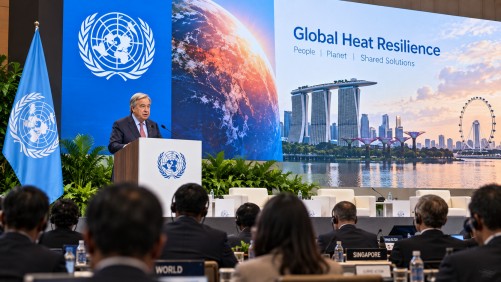
As global temperatures continue to rise, the urgent need for effective heat resilience strategies is becoming increasingly apparent. This was the focus of a recent four-day forum in Singapore, where representatives from over 60 countries gathered to discuss the pressing issue of extreme heat and its impacts on communities worldwide. During this event, the United Nations unveiled plans for a Global Heat Resilience Roadmap—a comprehensive strategy designed to aid nations in mitigating the risks associated with extreme heat and safeguarding vulnerable sectors.
The roadmap aims to bolster protection for critical areas such as water and food supplies, schools, hospitals, workplaces, and energy infrastructure during periods of extreme heat. The UN is encouraging countries to adopt sustainable practices like enhanced building ventilation, increased urban tree cover, shaded public spaces, and energy-efficient cooling solutions. These measures are not only intended to protect communities but also to address the environmental impact of rising air-conditioning demand, which currently accounts for about 20% of global electricity consumption and is expected to more than triple by 2050.
UN officials emphasized the necessity for stronger policies, better financing mechanisms, and robust emergency plans to effectively tackle extreme heat. As part of this initiative, the roadmap will feature systems to monitor progress and evaluate the efficacy of national measures. Participating nations will be given several years to develop and implement strategies tailored to their specific conditions.
Singapore, hosting the forum, showcased its commitment to the cause by establishing a Heat Resilience Policy Office to coordinate heat-management efforts. The city-state has announced plans to open over 300 cooling centers during heatwaves and has implemented energy-efficiency standards for air-conditioners, resulting in significant improvements in average cooling efficiency. These efforts serve as a model for other countries striving to enhance their heat resilience.
The Global Heat Resilience Roadmap represents a pivotal step in international cooperation to combat the adverse effects of climate change. By building on existing national plans and encouraging collective action, this initiative seeks to create a more sustainable and resilient future for communities worldwide.