
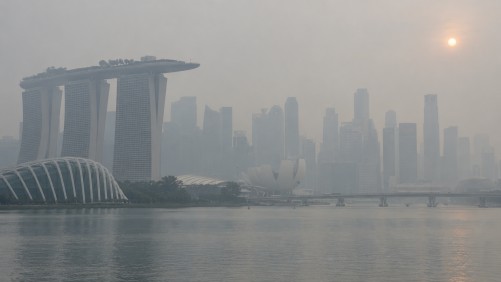
Singapore’s air quality remains a concern as the haze continues to envelop the island, particularly affecting the central region where the Pollutant Standards Index (PSI) reached unhealthy levels. As of 6 am on October 6, PSI readings recorded 130 in the central area, 117 in the west, 112 in the east, and 107 in the north, with only the south registering a moderate level of 95. A PSI reading between 101 and 200 is deemed unhealthy, indicating significant air pollution.
The haze in Singapore is being attributed to smoke from fires in Kalimantan and southern Sumatra, Indonesia. These areas have been experiencing dry conditions, leading to moderate to dense smoke plumes. Winds from the southeast and east-southeast are contributing to the deteriorating air quality in Singapore. Forecasts suggest that the PSI may remain in the high-moderate to mid-unhealthy range if the dry conditions persist.
Additionally, fine particle pollution, measured by PM2.5 levels, has been elevated in several regions. The central region recorded PM2.5 levels at 60, with the west at 59, the east at 56, the north at 48, and the south at 35. The situation has worsened since September when PSI levels first crossed into the unhealthy range, peaking at 164 in the central region on September 29.
Concerns are rising that these dry conditions may extend longer than usual this year, potentially prolonging poor air quality. This situation is partly due to weather patterns associated with a strong El Niño, which could delay the onset of the wetter season in parts of Southeast Asia.
Authorities and residents alike are closely monitoring the situation, as the prolonged haze poses health risks and disrupts daily activities. The ongoing air quality issues underscore the need for regional cooperation and sustainable practices to mitigate the impact of such environmental challenges in the future.