
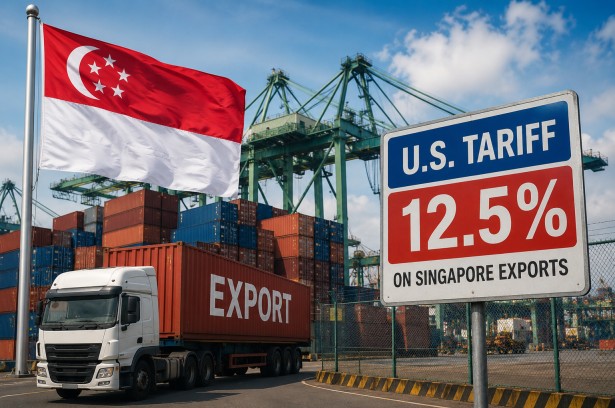
The United States has introduced a new tariff of 12.5% on roughly a third of Singapore’s domestic exports, citing concerns over the enforcement of forced labour laws as part of a wider trade policy impacting numerous global economies. Singapore has dismissed these concerns, asserting that it maintains a robust legal system to combat forced labour and does not permit such practices. The Ministry of Trade and Industry has expressed its intention to continue talks with U.S. trade officials, aiming to gain a clearer understanding of how these tariffs will be rolled out.
Several of Singapore’s key exports—such as pharmaceuticals, semiconductors, specific electronics, aerospace and energy products, and items already subject to existing U.S. sector-specific tariffs—are not affected by the new tariff. This exclusion provides some relief to industries that might otherwise face significant economic challenges due to the new trade measure.
However, the introduction of this tariff has sparked concerns among business groups, who warn that it could add a layer of uncertainty for manufacturers and exporters. This comes at a time when the U.S. is also conducting a separate investigation, which might lead to further trade actions. The prevailing uncertainty underscores the need for businesses to consider diversifying their export markets and reinforcing their supply chain resilience.
Industry leaders are advising companies to prepare for potential disruptions by exploring alternative markets and strengthening supply chains. As the dialogue between U.S. and Singaporean trade officials continues, businesses remain on alert for how these developments may impact their operations and strategies going forward.