
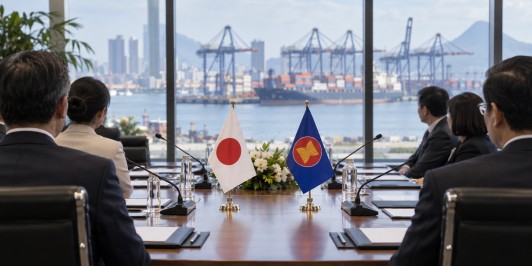
As global supply chains face increasing threats and the role of artificial intelligence in the economy grows, Japan and the Association of Southeast Asian Nations (ASEAN) are set to explore an expansion of their existing economic partnership. This decision came during a meeting of economic ministers in Manila on September 20, reflecting a shared commitment to bolstering supply-chain resilience and energy security.
The discussions between Japan and ASEAN aimed at updating their economic partnership agreement, initially established in 2008. The agreement, which has already evolved to encompass trade in services and investment, will now consider addressing the risks that affect global supply chains. The ministers emphasized the importance of closer economic cooperation to navigate the challenges posed by geopolitical tensions and uncertainties in global trade.
Energy security was another critical topic at the meeting. Japan expressed its continued support for strengthening oil stockpiles within ASEAN countries, a strategic move intended to stabilize energy supplies despite ongoing disruptions in key Middle Eastern routes. This initiative underscores the importance of regional collaboration in ensuring stable energy provisions amid potential future disruptions.
In a testament to the robust economic ties between the two regions, Japan and ASEAN recorded $245.4 billion in two-way merchandise trade in 2025. Meanwhile, Japanese investment in ASEAN reached $9.5 billion, highlighting their significant economic interdependence. The proposed expansion of their partnership aims to further solidify and enhance these ties by adapting to new economic realities.
This collaboration between Japan and ASEAN serves as a proactive response to the shifting global economic landscape. By focusing on critical areas such as supply chains, energy security, and artificial intelligence, both parties are preparing to meet future challenges with a unified strategy.