
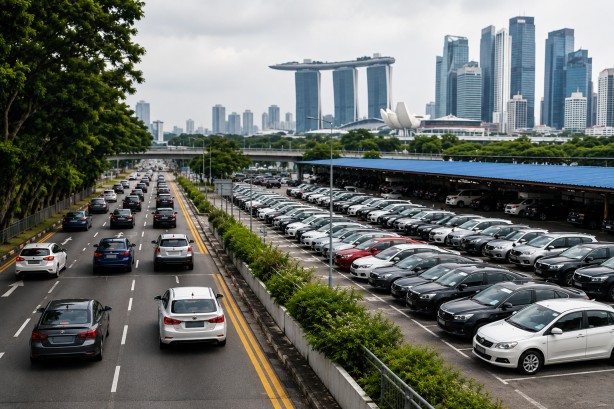
The private car population in Singapore has fallen to its lowest point since 2019, largely due to the increasing costs associated with vehicle ownership. This economic shift has led many residents to explore alternatives such as leasing, car-sharing, and ride-hailing services. By the end of June, private cars constituted 79% of the total car population, a decrease from 82.5% in 2021. Meanwhile, rental vehicles have surged to a record 14.9% of the market share, indicating a significant change in consumer behavior.
According to industry experts, the primary driver behind this trend is the persistently high premiums for the Certificate of Entitlement (COE), which have considerably inflated the expense of owning a car. This system, unique to Singapore, regulates the number of vehicles on the road by requiring a license that allows the holder to own a vehicle. The rising cost of these certificates has led many potential car buyers to reconsider whether owning a car is financially viable.
The growing preference for rental options has prompted leasing companies to expand their fleets to meet the rising demand. As a result, more residents are opting for these services as a cost-effective alternative, allowing them to avoid the steep expenses associated with car ownership. This shift reflects a broader trend towards more flexible and economically sustainable modes of transportation.
In response to these economic pressures, a significant number of motorists are also turning to public transportation or shared mobility services. These options provide a way to manage and reduce monthly transportation expenses, appealing to those who wish to maintain mobility without the financial burden of car ownership. The increased reliance on these services highlights a changing landscape in how transportation needs are being met in urban environments like Singapore.